

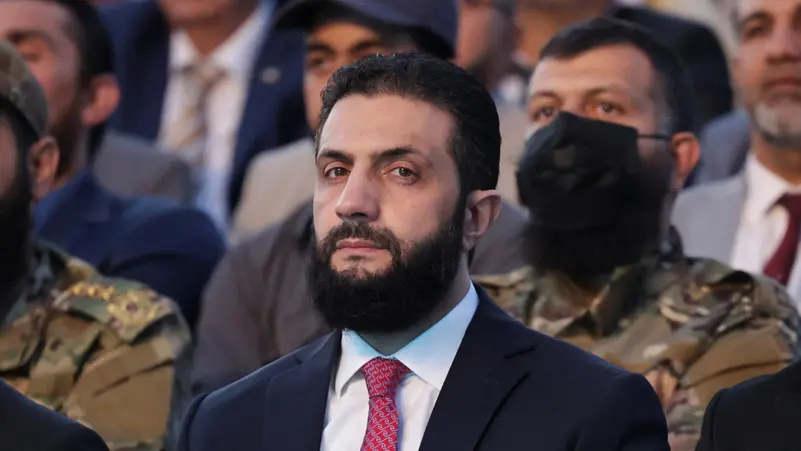
WASHINGTON/RIYADH: In a dramatic culmination of Syria’s year-long diplomatic resurgence, Syrian President Ahmed al-Sharaa met US President Donald Trump at the White House on Monday marking the first-ever visit by a Syrian head of state to Washington and signalling an extraordinary shift in relations between the former adversaries.
The meeting capped a whirlwind year for the 42-year-old former rebel commander, whose Islamist fighters toppled longtime Syrian ruler Bashar al-Assad last December, ending more than two decades of autocratic rule.
Since then, Sharaa has embarked on an ambitious campaign to reintegrate Syria into the international community, pivoting away from traditional allies Iran and Russia and seeking rapprochement with Turkey, the Gulf states, and the West.
According to US officials, the White House discussions focused heavily on regional security and Syria’s possible role in a US-led coalition against the Islamic State (IS).
Washington is also reportedly brokering preliminary talks between Syria and Israel on a potential security arrangement that could redefine Middle Eastern alliances.
Sources told Reuters that the US plans to establish a limited military presence at a Damascus airbase, part of an emerging security framework that could formalize Syria’s pivot toward the West.
President Sharaa has shown tremendous leadership in difficult circumstances, Trump told reporters before the meeting. He’s a tough guy in a tough neighborhood, and I think he’s doing a very good job.The talks come just days after Washington announced that Sharaa had been removed from the US terrorism watchlist, where he had been designated as a Specially Designated Global Terrorist since 2013.
Sharaa’s transformation from a US-designated jihadist to a recognized head of state has been one of the most remarkable political reversals in modern Middle Eastern history.
Once known as Abu Mohammad al-Golani, Sharaa joined al-Qaeda in Iraq during the US invasion in 2003 and later founded Hayat Tahrir al-Sham (HTS), one of the main insurgent groups fighting Assad.
Captured and imprisoned by US forces in Iraq, he was later released, returning to Syria to lead an armed rebellion that eventually toppled the Assad regime in late 2024.
His renunciation of extremism, break with al-Qaeda in 2016, and gradual move toward nationalism paved the way for his international rehabilitation.
The United Nations Security Council last week lifted sanctions on Sharaa and his interior minister, Anas Khattab, while the US dropped a $10 million bounty on his head in December. Central to Sharaa’s Washington visit is his push for a full repeal of the Caesar Sanctions Act, the toughest measure still restricting Syria’s access to global financial systems.
Trump has already announced the lifting of most Syria-related sanctions, but Congressional approval is required to repeal the Caesar law a move experts say could unlock billions in foreign investment.
The World Bank estimates Syria’s reconstruction needs at over $200 billion, following fourteen years of devastating war that displaced millions and fractured the country’s social fabric.
However, persistent sectarian violence since Assad’s ouster claiming more than 2,500 lives has raised concerns about the new government’s capacity to maintain stability and govern inclusively.
Analysts describe Syria’s recent trajectory as part of a broader regional realignment, with Washington, Riyadh, and Ankara working to draw Damascus away from Tehran and Moscow.
If successful, the move could dramatically reshape Middle Eastern geopolitics, potentially turning Syria from a pariah state into a key Western security partner.
For Trump, the meeting represents a major foreign policy gamble betting on a former insurgent’s ability to stabilize one of the world’s most volatile nations.
Whether the bold new partnership endures, observers say, will depend on Syria’s ability to maintain peace, disarm militias, and win back the trust of its own people.